An aspect of mathematics that I try to emphasize all the time is that the mathematics we teach in high school is 2-dimensional. Even with high school Calculus, although there is the aspect of motion, the graphs continue to maintain 2-dimensionality.
This is especially a problem for Geometry students, who do not understand without explanation that the Geometry they are learning is merely a ladder towards 3-dimensional Geometry, as it was in mathematical history. The whole problem of Euclid’s Fifth Postulate was the error in dimensions, through no fault of his own.
It was not until the properties of hyperbolic geometry were discovered (stimultaneously!) by Bolyai and Lobachevsky, and expounded upon by giants Riemann and Poincare that the issues with the Parallel Postulate were resolved – and this is 2,000 years after the fact!
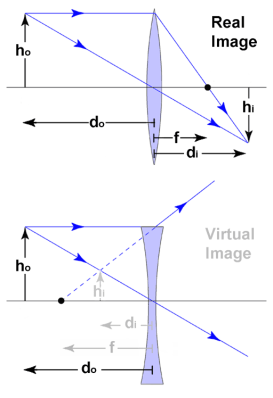
Regardless of the disconnect between Euclidean Geometry and hyperbolic or spherical Geometry, I do talk to students about importance of studying the abstractness of 2-D Geometry. There is in fact no such thing as a “triangle” – only “triangular objects”. The properties that arise from studying triangles as an abstraction allow us to engage with triangular objects, or circular objects, for example. Teaching abstraction allows students to understand that other sciences also work with abstraction, for example, optical theory.
In my honesty about the “absolute importance” of studying Geometry, students understand more of the mechanics of “why” we study Geometry. I get a lot of these questions at the beginning of the year, and after taking time to explain this repeatedly, they come to accept that they are training their brains in the art of abstraction and data management.
It’s not enough to simply talk about the disconnect between physical reality and abstraction. Each dimension has it’s own logic – something that is cutely touched on in Flatland: A Romance of Many Dimensions, even though Abbott does not explicitly explain the phenomenon.
Here is a handy (and incomplete) chart of the differences in 2-D and 3-D logic
| Formal Logic (2-D) | 3-D Logic |
|---|---|
| Photograph | Movie |
| a=a | a=/=a |
| Exempt from time | In motion |
| A or ~A | A and ~A |
| If p, then q | If a,b,c,d,e,f… then q |
Another area where the 2-D issues arise is Algebra 1. The world does not resolve itself beautifully into simple word problems, which is why many of the word problems are ridiculed by anyone who has taken an Algebra class (everybody).

The problem with 2-D, static mathematics continues when teaching Economics.
Every introductory/high school economics class uses linear or parabolic algebraic- formulas when attempting to describe the world. I took an entire course dedicated to creating excel spreadsheets to employ linear systems of equations in attempt to cure the problem – that Algebra simply not useful in managing constraints and optimization. Algebra presents each constraint as individually moving parts without any real causal connection to each other. There is little wonder that students that go through introductory economics, or even study economics as a major in college but do not study calculus, cannot visualize a plan for the economy.
The world works not only in 3 Dimensions, but is also in motion, which is a continuous and differentiable function, and follows a deterministic path, contextualized by the characteristics of the social infrastructure surrounding each juncture.
When attempting to use Algebra to create constraints and find motivations for decisions, the answers are left to individuals and their personal capacity for understanding the world. It is then understandable that some educated people attach themselves to the profit motive – it is clear cut algebra and takes into consideration little else when making decisions. Maintaining commitment to the profit motive allows for those people to maintain a grasp on how the world works by limiting the number of constraints required to develop functions. It certainly can seem scary to bring importance to a multitude of factors, especially when ones job is on the line and attempting as an individual to invite complications is not a guaranteed success.
For these reasons I include the subject of dimensions in my classes in many different sections.
Note: I would like to include a section about Algebra-based Physics, but that can be its own entry. Perhaps later.
 Whole World Services
Leave a comment