I love using animated gifs in the classroom. It brings a real vibrancy to the mathematical formulas that we are studying. If my complaint is that mathematics in the classroom is two-dimensional and static, then animated gifs and interactive math (plug for Euclid’s Muse) allow me to bring the motion to students in a methodical and perfect manner.
- trigonometry – especially with Fourier Transforms and sound waves
- tesseracts and other 4-D objects
- Pythagorean theorem
The following is a gif of how women are leaked out of the STEM pipeline by Calculus 1. I think animated gifs used consistently will help plug the pipeline, for men and women!
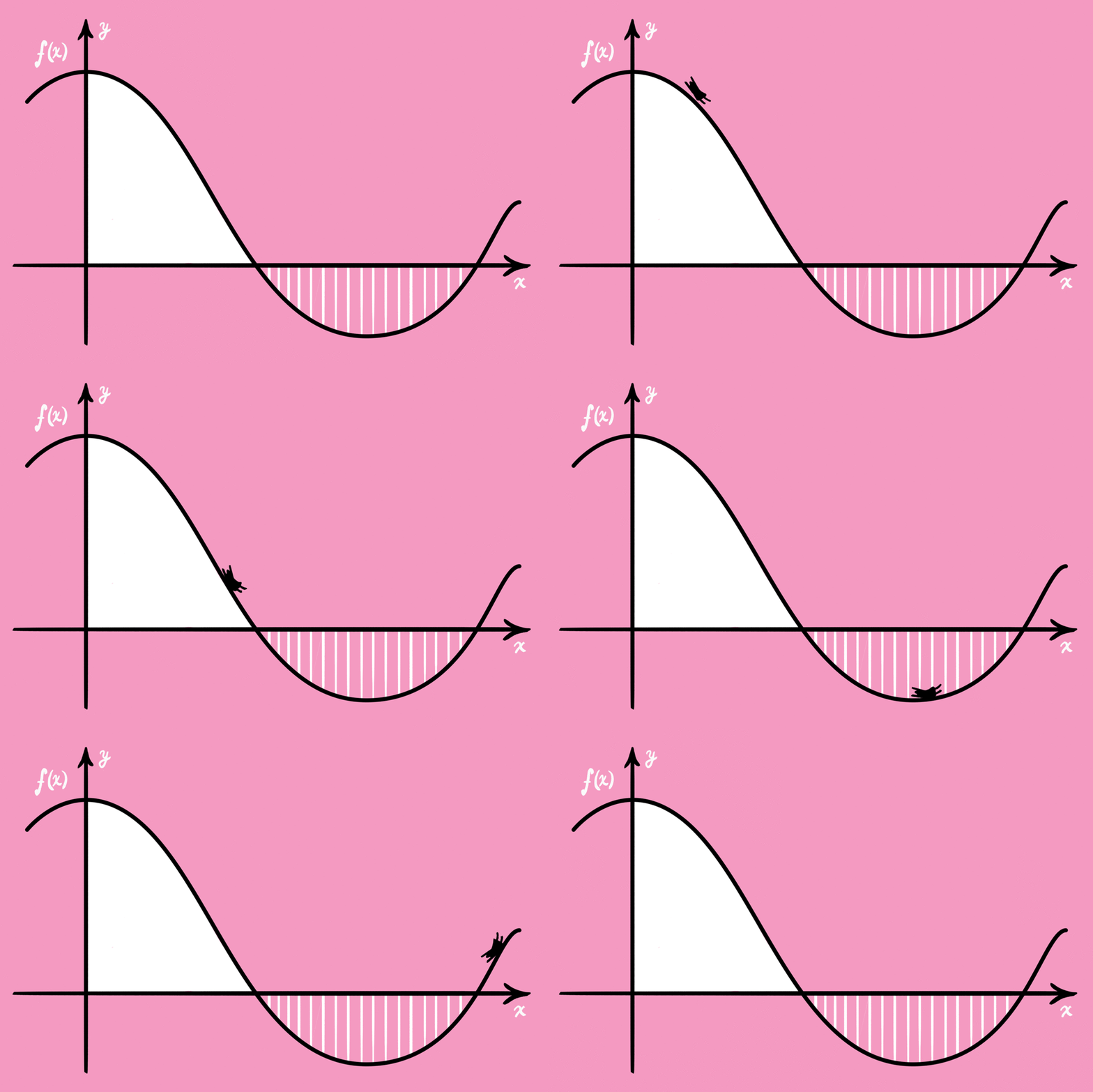
One of the biggest challenges in math education is that it often feels static, rote, abstract, irrelevant, and two-dimensional. Equations sit on the board like still life paintings, and students are expected to imagine motion, rotation, transformation in their heads, a feat not reached by most. This is where animation changes everything.
Trigonometry in motion
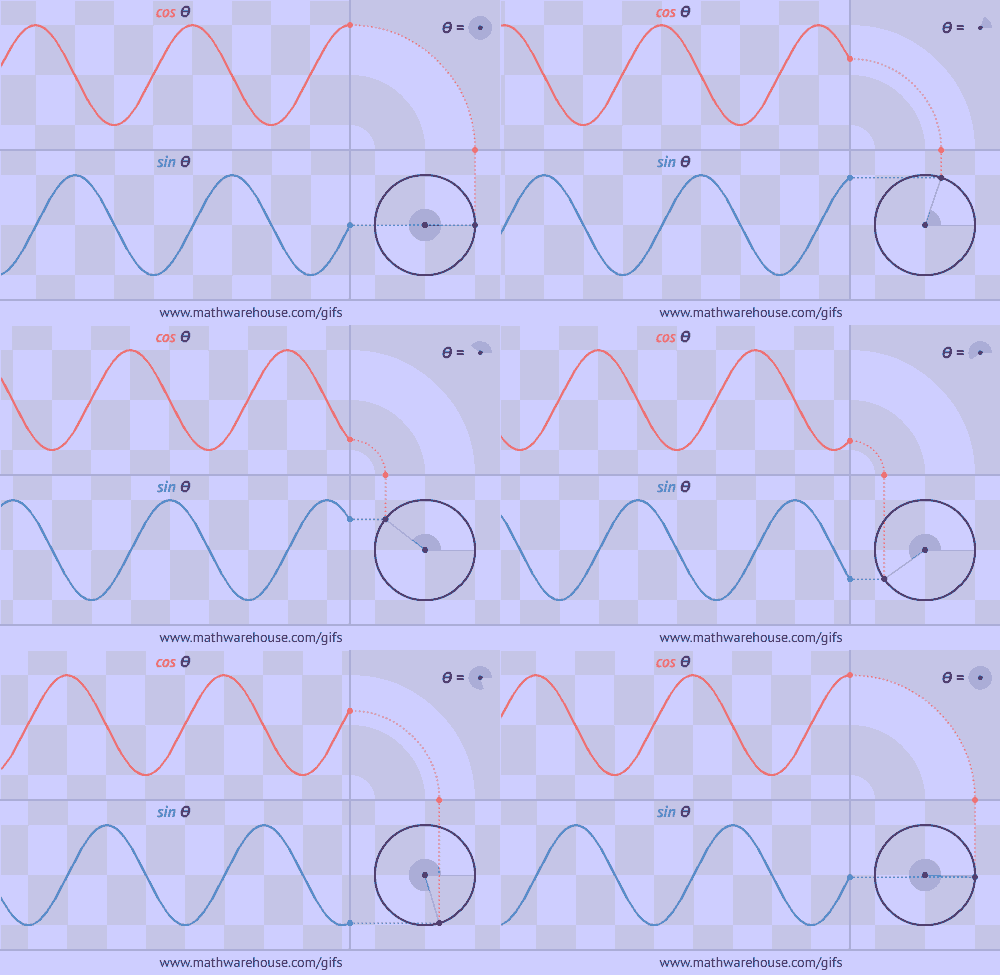
This one helps clarify students when we move from the unit circle to the graphs of the trigonometric functions. In the past, I tried to show them on the board, which is really not helpful and actually confuses them much more. In fact, I would choose letting them memorize the graph and unit circle as independent concepts rather than trying to teach them the connection without this gif. I send it to their phones and let them stare at it until it fully clicks.
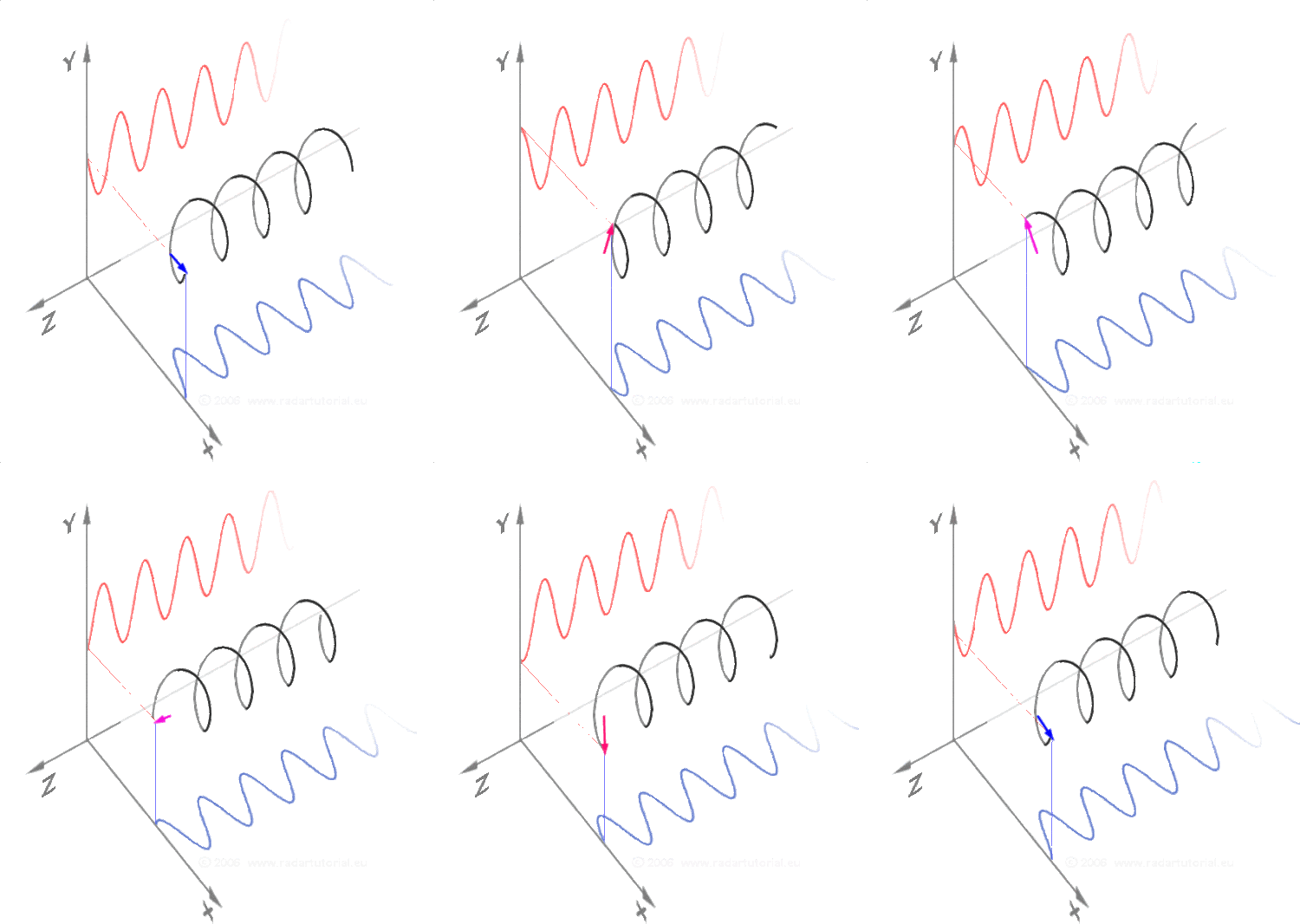
This is the 3-D version of the above, important for higher calculus, and just general recognition.
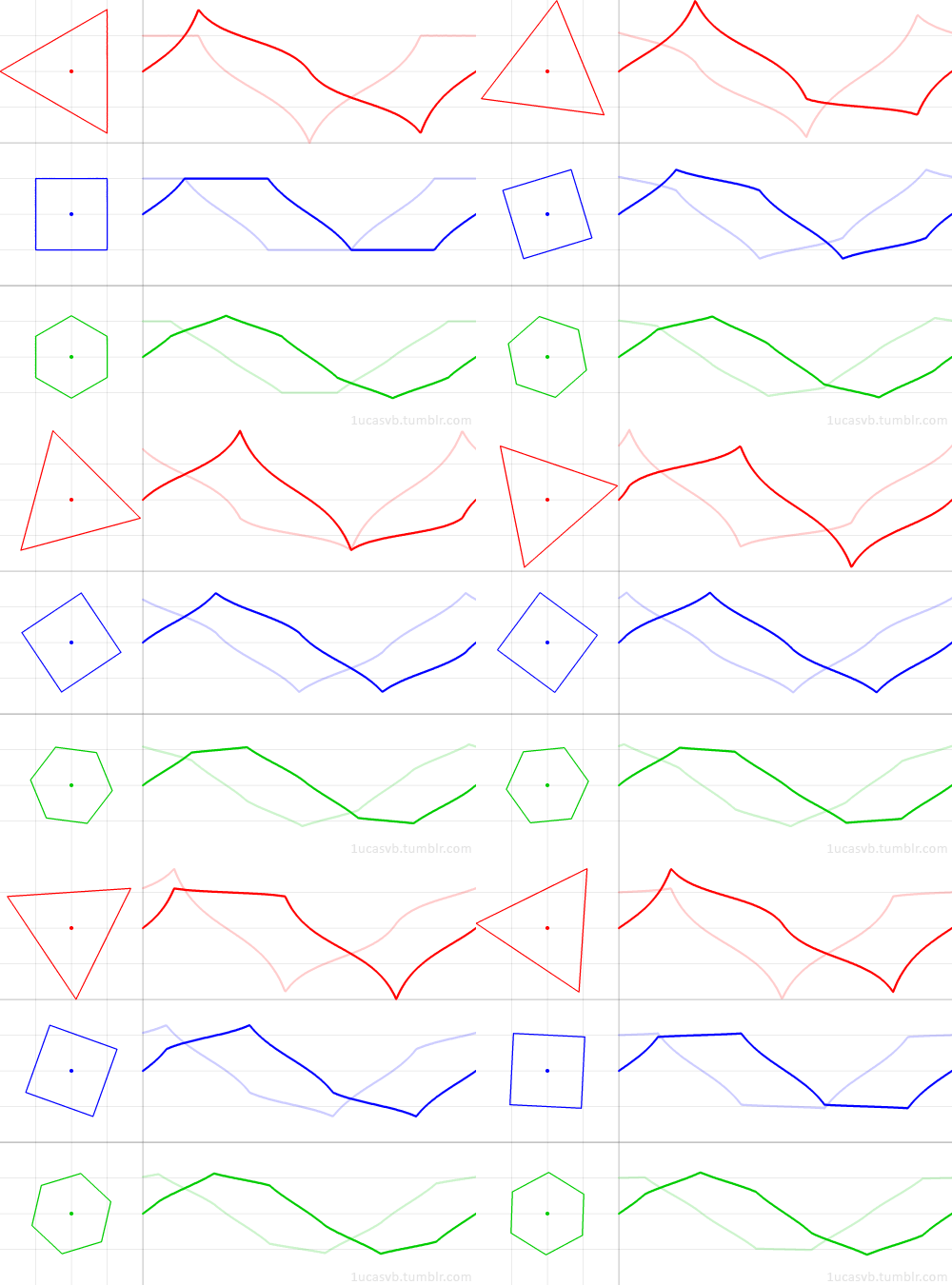
I use these shapes to further the concept of the sine and cosine waves as dependent on the height and distance of each shape. I combine it with this website: Trigonometry in Nature: Sinusoidal Waves as Sound and
Calculus in motion
Calculus is the mathematics of motion. How can this subject, then, be allowed to wither on the pages of a textbook?
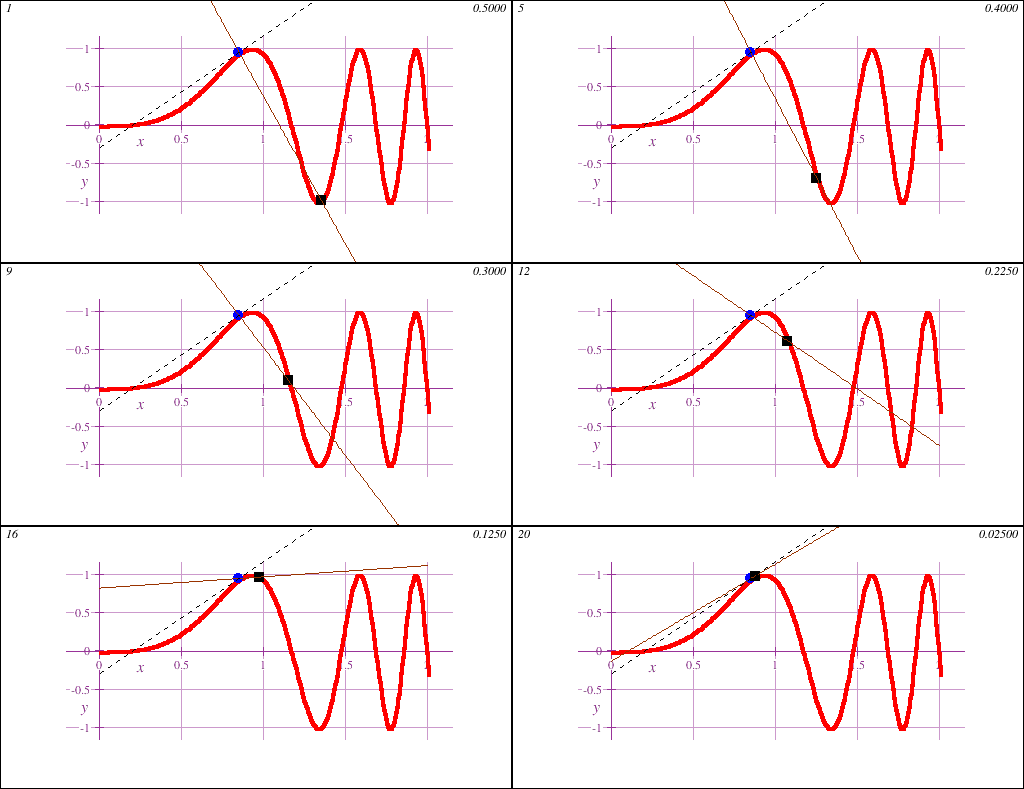
Here is the very first concept introduced in any Calculus textbook, of the instantaneous rate of change versus the rate of change. Students can hate the concept of a limit, and the frustrating introduction of limits through this concept:
f(x)=f(x+h)-f(x)/h
*shudder* this function shows very little in terms of what is actively happening, and once students learn derivative shortcuts, they completely ignore what a limit is – it’s motion! It’s approach! It’s movement, and seeing what’s happening right where you want to be!
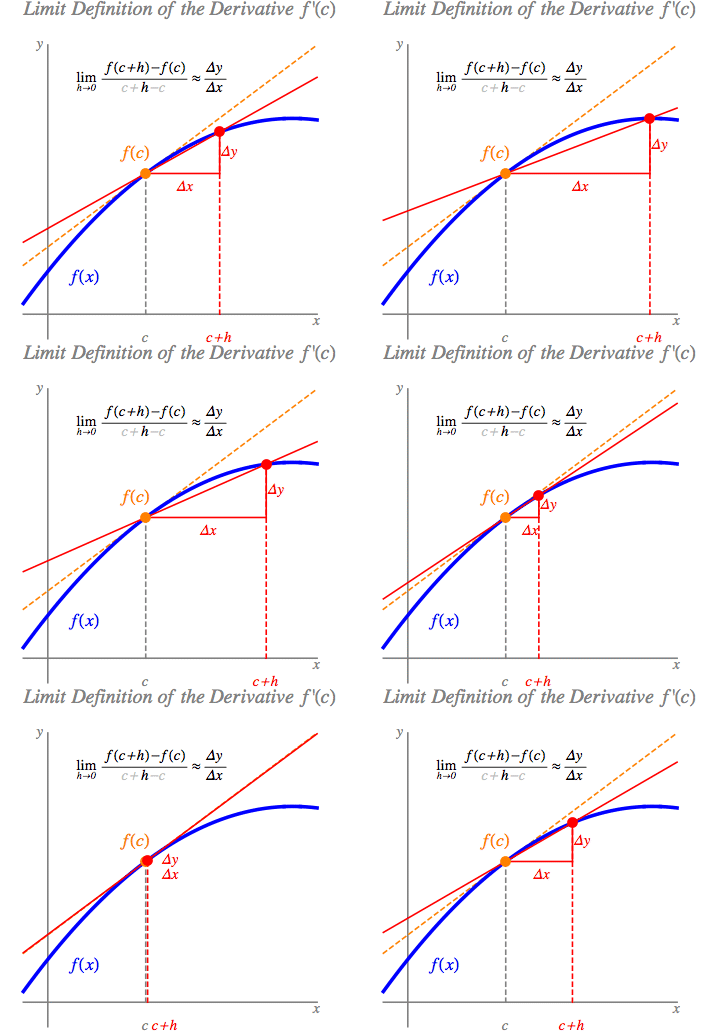
The gif above does a good job of showing how the average rate of change is different than to what’s happening at the right side of the approach. Super shout out to Fossee Animations!
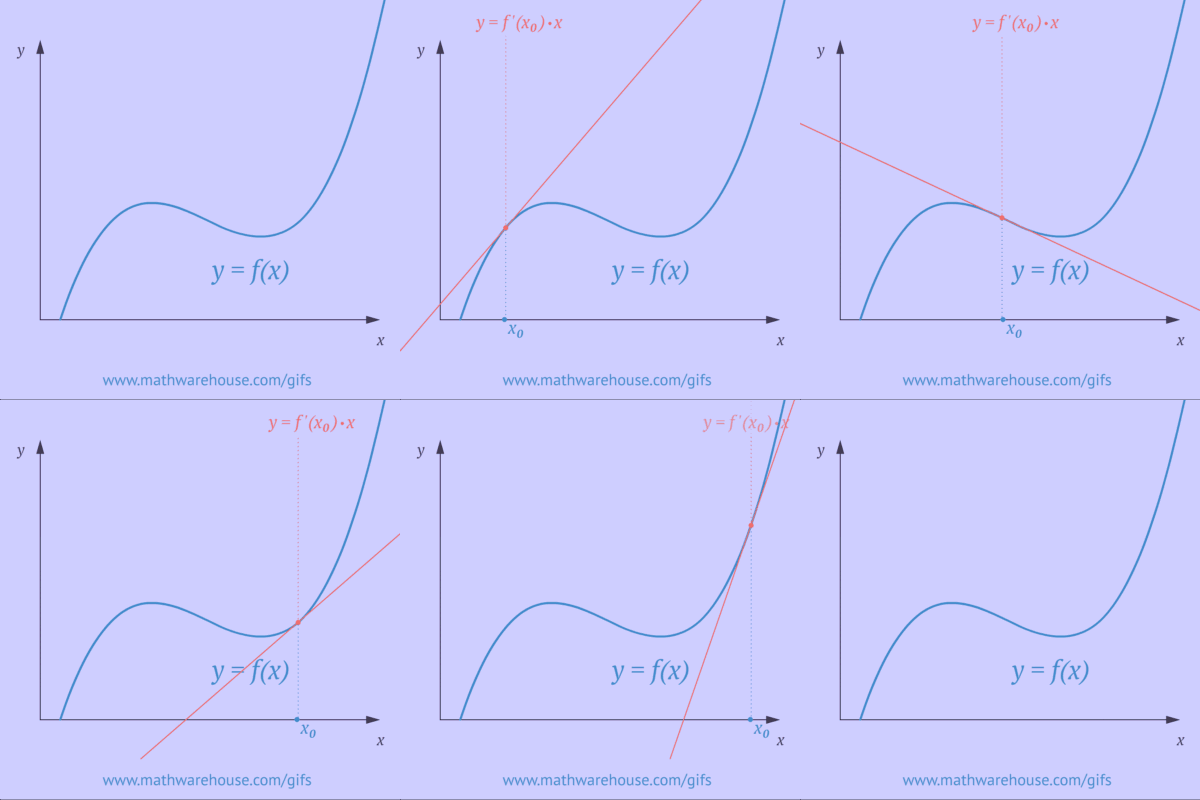
This gif demonstrates the derivative, which students often do not fully comprehend as the actual function putting out what the tangent line looks like at each point on the original function. Once they get the power rule, any theoretical understanding flies right out the window!
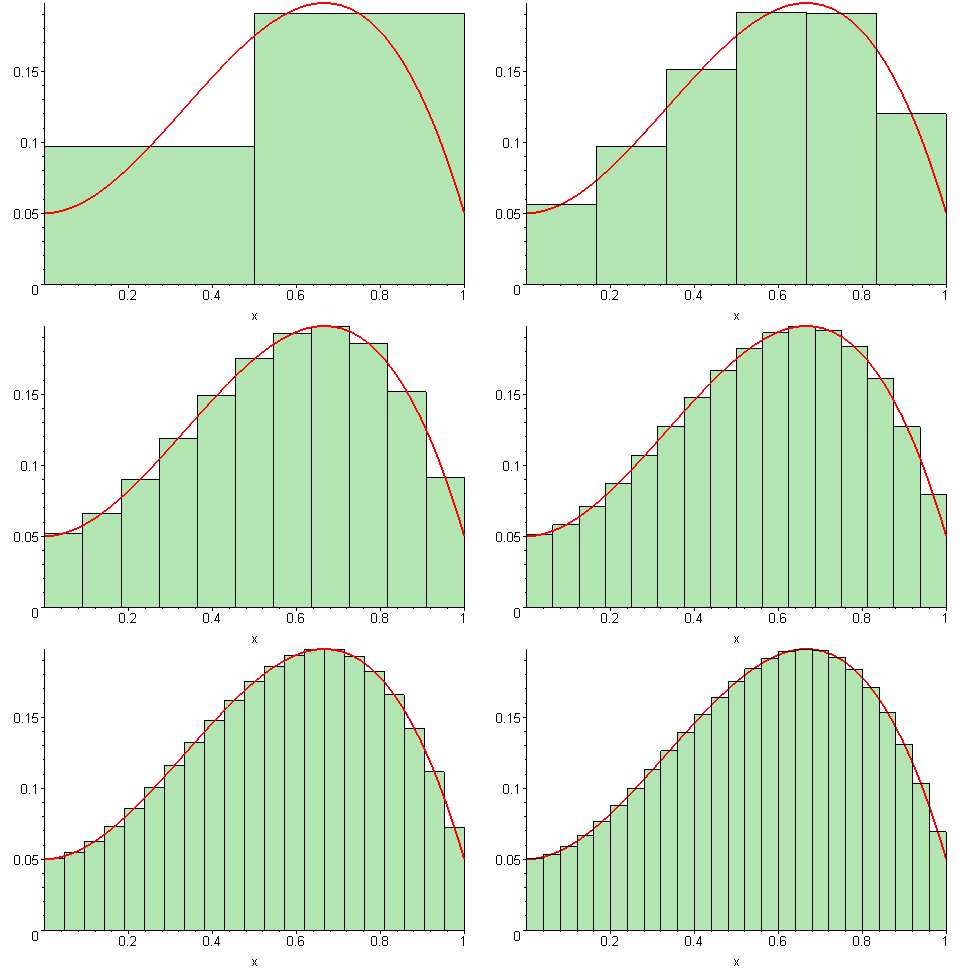
Here’s a good visualization of Riemann Sums (although I wish it went on a lot longer) and how the Cauchy’s development of integration was such a huge development! Mathematical giants, from Euler and d’Alembert, Daniel Bernoulli, and Lagrange all attempted to solve this problem with rigor, and Riemann found a pretty good manner by approximating the area under the curve.
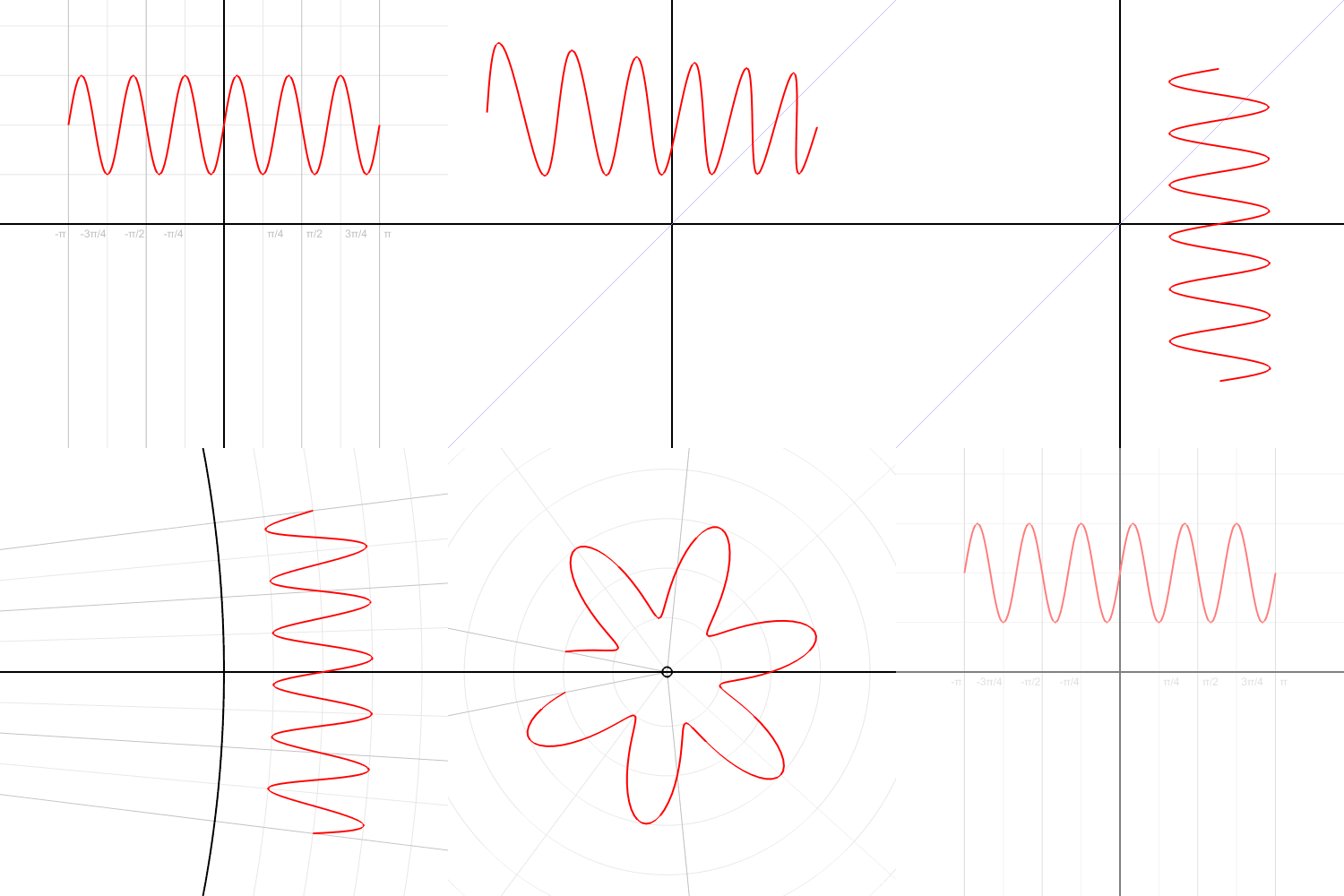
Here is the very confusing action of converting from Cartesian coordinates y=sin(6x)+2 to polar coordinates brought to life.
So these are just some examples of the use of mathematical gifs to teach difficult concepts of motion.
Animation isn’t just icing on the cake. It reduces cognitive load. It turns “memorize this procedure” into understanding. Especially for students who struggle with abstraction, animated visualization becomes a critical bridge to mathematical reasoning.
 Whole World Services
Leave a comment